The Dossier · Full Reading

Fourteen chapters. One sequence.

Scroll through the investigation, end to end. Take it slowly - the order matters.

Chapters 01 - 05 are free · 06 - 14 are reserved for members.
Psychology · Conditioning7 min read
01

The Fear Signal

How dread became the operating frequency of public life

Scroll to begin

Fear is the oldest leash. Long before laws, currencies, or borders, societies were governed by what their members were taught to dread. What changed in the early 2020s was not the existence of fear - it was its delivery system. A continuous broadcast, refreshed each morning, calibrated to keep the nervous system in a low hum of vigilance.
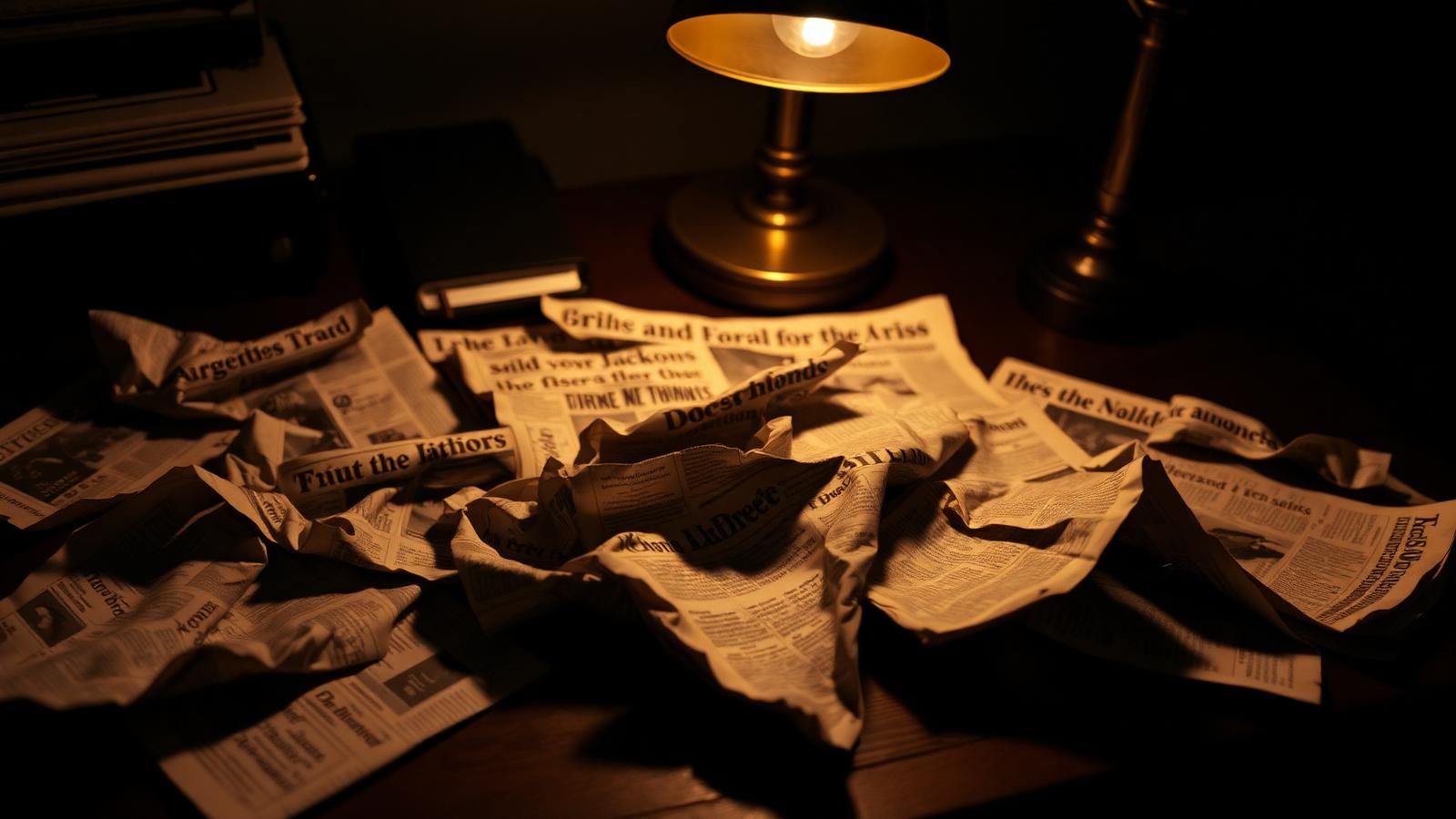
Headlines that never closed - the carrier wave of a continuous alarm.

Public health became the carrier wave. Curves, counts, and case maps were not lies - but the framing was the message. A graph that never closed. A threshold that never arrived. A horizon that kept receding the moment compliance was achieved.

"A frightened citizen is a manageable citizen. Not because fear makes us evil - but because fear makes us small."

The result was not a single moment of panic but a sustained physiological state. Sleep degraded. Cortisol elevated. Trust between neighbours - the lubricant of every functioning society - quietly evaporated. Once installed, the signal did not need to be loud. It only needed to be there.

§ The mechanism

Three reinforcing loops kept the signal alive: continuous count, asymmetric consequence, and pre-emptive obedience. The count gave it texture. The consequence - job loss, social exile, loss of access - gave it teeth. Pre-emptive obedience gave it scale.

End of Chapter 01

The signal taught us to be afraid. The next chapter is about what the signal asked us to wear.
Sociology · Visible compliance6 min read
02

The Mask As A Social Signal

Cloth, compliance, and the visible language of obedience

Scroll to begin

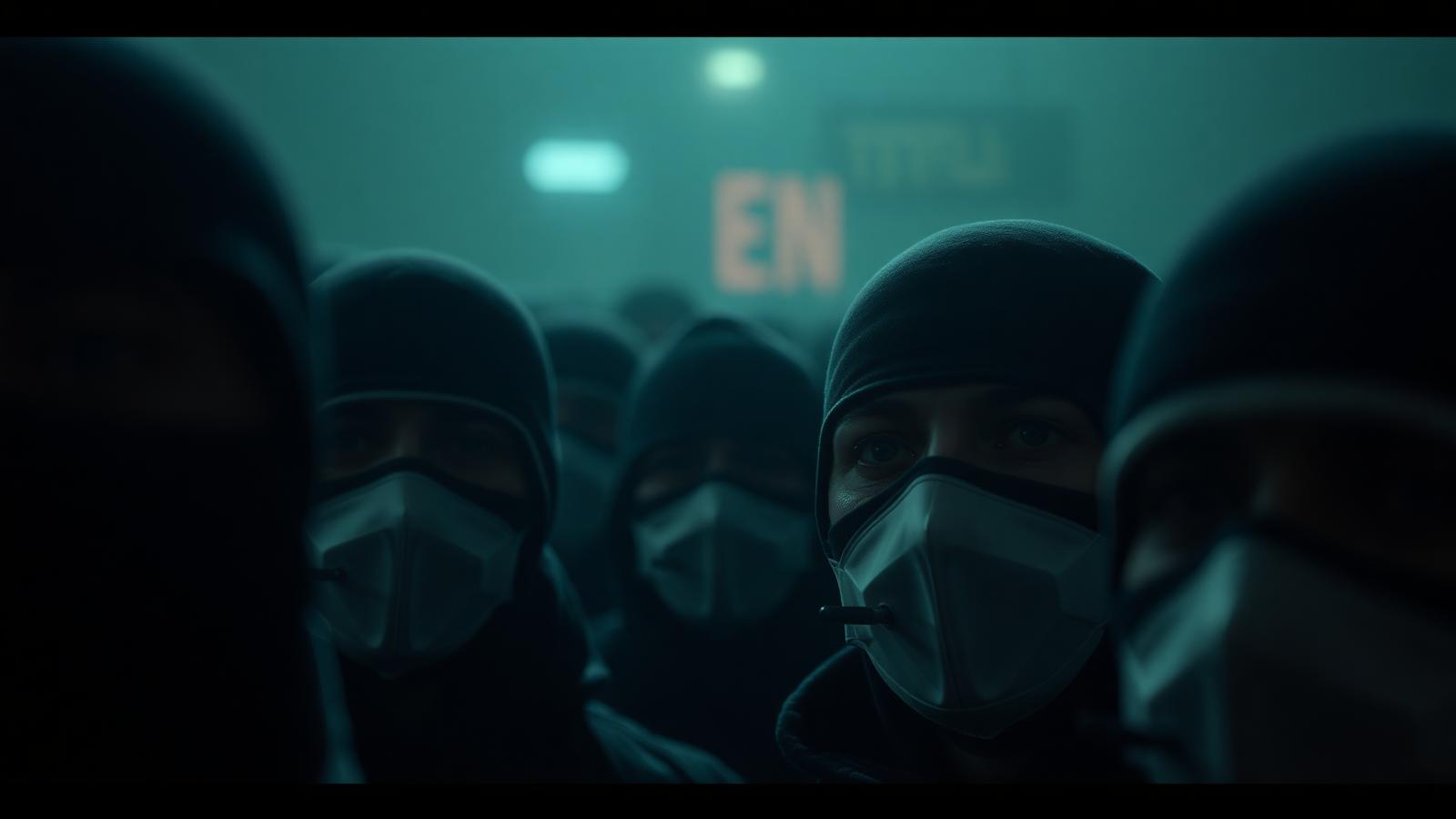
A mask is a piece of fabric. A mask mandate is a piece of architecture. The first protects respiratory droplets within a debated radius; the second redesigns the social field itself - who can enter, who can speak, who counts as a citizen in good standing.

A piece of fabric became the most legible badge of belonging in a generation.

What made the mask unique was its visibility. Unlike a vote, a tax return, or a database record, the mask was readable at twenty paces. It transformed compliance from a private act into a public uniform - and non-compliance into an immediate moral category.

"When obedience becomes wearable, dissent becomes a face."

Studies of effectiveness were secondary to the sociology. The mask did not need to work on a virus to work on a population. It worked the moment two people on a street corner looked at each other and silently sorted one another into camps.

§ The legacy

Long after mandates lifted, the muscle memory remained: scan the room, assess the signal, decide who is safe. The mask was not just a covering. It was a rehearsal - for every visible badge of belonging that would follow.

End of Chapter 02

Once we agreed to wear our compliance, we agreed to ask permission for everything else.

Governance · Liberty8 min read
03

When Permission Replaced Freedom

The quiet inversion of the citizen–state contract

Scroll to begin

Freedom, in the older sense, was the default. It did not need to be requested. The state, in turn, needed a reason - a warrant, a statute, a hearing - to remove it. Somewhere between March 2020 and the second winter, that arrangement was quietly inverted.

Movement, gathering, worship - quietly reclassified as applications.

Movement required justification. Gathering required exemption. Worship required a form. The verbs of ordinary life - meet, travel, mourn, marry - became applications, each routed through a portal that could grant or deny.

"A right that must be applied for is no longer a right. It is a privilege awaiting renewal."

The inversion was rarely announced. It was administered. Each new layer was framed as temporary, proportionate, and reviewable. None of those adjectives were enforceable in the long run.

§ What was lost

What was lost was not a list of activities. It was a posture - the citizen as the source of authority, the state as the borrower. When the posture flips, every subsequent reform begins from the wrong starting line.

End of Chapter 03

And once permission was the default, every move you made left a trail.

Surveillance · Infrastructure9 min read
04

The Digital Trail

Why a frictionless life is a fully audited one

Scroll to begin

Convenience has a ledger. Every tap, scan, swipe, and check-in writes a line in a record that you do not own, cannot read, and were never asked to authorise. The trail is not a side effect of digital life - it is the product.

Every tap writes a line in a record you do not own and cannot read.

Contact tracing apps were the public face of a much older logic. Telecom metadata, payment rails, transit gates, loyalty cards, and ad-tech graphs had been quietly assembling the shape of a life for a decade. The pandemic simply moved the conversation into the open and asked us to be grateful for the offer.

"If you do not pay for the convenience, the convenience pays for itself with you."

The aggregation is the threat - not any single record. Twelve harmless data points become a portrait. A portrait becomes a predicted behaviour. A predicted behaviour becomes a pre-emptive constraint.

End of Chapter 04

The trail set the table. The credential set the price of admission.

Health credentials · Access control11 min read
05

Conditional Participation

Medical credentials and the rise of access-based citizenship

Scroll to begin

A passport, traditionally, asserts identity. A medical passport asserts permission. The distinction sounds small. In practice it rewires the relationship between the citizen and every venue, employer, airline, and authority they will ever encounter.

Whatever you scan to enter, you can scan to exclude.

Restaurants became checkpoints. Concert halls became clinics. Borders, already complicated, became conditional on a status that could be revoked between issuing and arrival. The infrastructure built to certify health proved equally fluent in certifying anything else - financial standing, social score, ideological alignment.

"Whatever you can scan to enter, you can scan to exclude."

Defenders argued the credential was a passport back to normal life. Critics noted that any passport implies a border, and any border implies a guard, and any guard implies a population that has been re-categorised by default. The categories outlive the crisis. The infrastructure does not unbuild itself.

§ The credential stack

A working stack already exists: digital identity, biometric anchor, verifiable credential, interoperable wallet, programmable access policy. Each layer is useful in isolation. Composed, they describe a society where participation is conditional by default and earned by performance.

A Case Study

The Athlete Paradox

One of the most debated aspects of the post-pandemic period concerns reports of cardiac events among athletes and younger populations.

For some observers, these reports raise important questions about long-term health monitoring, risk communication, adverse event reporting systems, and the ability of institutions to openly discuss uncertainty. For others, the data remains inconclusive, requiring additional investigation and careful interpretation.

Regardless of where a reader stands, the discussion highlights a broader issue.

"How should societies evaluate risk when information is incomplete?"

"How should institutions communicate uncertainty?"

"And what happens when public trust becomes dependent upon the perception that difficult questions are allowed to be asked?"

The concern is not simply about individual studies. It is about confidence in the process itself.

When citizens believe questions cannot be discussed openly, trust begins to erode. And once trust erodes, even legitimate expertise struggles to maintain credibility.

The challenge for the future is not merely scientific. It is relational. Can institutions maintain trust while acknowledging uncertainty? Can citizens remain curious without becoming cynical? Can disagreement occur without immediate polarisation?

The answers may prove just as important as the medical debate itself.

End of Chapter 05

Once participation became conditional, speech was the next thing to be filtered.

CONTINUE THE INVESTIGATION

You've read the opening.
Now read the architecture.

Continue through the dossier, revisit the global patterns in World Lens, and stay close to future updates as the archive expands.

Chapters 06 - 14 · World Lens · future dispatches are reserved for members.
Unlock full access · $27 one-time
From Chapter 06 onward.
CHAPTER 06· LOCKED

The Speech Filter

Moderation, misinformation, and the narrowing of the sayable

CHAPTER 07· LOCKED

When Tribes Replace Truth

The fragmentation of social cohesion

CHAPTER 08· LOCKED

When Convenience Became Control

Frictionless systems, programmable money, and the soft cage

CHAPTER 09· LOCKED

The Price Of Movement

Why the most powerful tax in human history was never called a tax

CHAPTER 10· LOCKED

The Convergence

Where identity, money, health, and movement collapse into one rail

CHAPTER 11· LOCKED

From Dependency To Resilience

The first turn - naming what we depend on, and beginning to unhook

CHAPTER 12· LOCKED

The Resilient Nervous System

Why sovereignty is biological before it is political

CHAPTER 13· LOCKED

Local Resilience In A Global World

The street, the soil, and the small economies that outlive empires

CHAPTER 14· LOCKED

Are You Awake Yet?

The question the dossier was always going to end with

End of The Dossier

Awareness precedes choice. Choice precedes sovereignty.